

Mary Kay Daniel was the catalyst for Saturday’s successful Walk to End Polio. There were about 40 participants, door prizes, information, food, and connections. The walk raised $930, plus $300 in sponsorships. Thanks to all who volunteered, donated, and participated.

Martina Nerhus of Youth For Christ (YFC) spoke to our club about the organization’s work with middle school students in the Fort Dodge area. YFC has 13 sites in the region, and Martina has been on staff for nine years, the last two in Fort Dodge.
YFC staff spend time in the local schools with large group activities occurring Thursday afternoons. On Thursdays, students gather at Crossway Church for Campus Life. Every club meeting ends with a Bible story, and students also join small groups, attend events like Fort Frenzy and Lost Island, and go to summer camp. Average weekly attendance is about 20. YFC reaches about 80 students through all their different activities, including small groups that meet weekly for an hour in all sorts of locations. The goal is to reach young people who don’t yet know Jesus. YFC is currently serving middle school students in Fort Dodge and plans to expand to high school within the next three years.
Martina shared the story of a 7th grader who was angry and making poor choices, “that kind of kid.” Things began to change when he was invited to Campus Life, where he made new friends and met a leader who showed up every week. At camp, he talked about the choices he makes and the kind of person he wants to be. He learned he doesn’t have to follow others and can make his own decisions. He also learned how to pray and discovered he isn’t alone. “I’m not the kid I used to be,” he said. “I’m proud of who I am becoming.”
YFC’s next fundraiser is March 6 at the Laramar, where stories and goals will be shared.
Volunteers are key to YFC’s success. They listen, pray with students, and help behind the scenes. Needs include large-group volunteers on Thursdays, small groups and 1:1 mentors. YFC is supported by area churches across denominations rather than any single one, and local faith-based organizations are welcome to get involved.
Martina reminded the club that this is the most unchurched generation ever, and that 16 students had never heard the story of Jesus. Her message to young people: “You are worthy and loved.”

Advance Notice for “Save the Date”
Rotary will again serve the Mana Meal at First Methodist Church on December 12th. Our workers will prepare the meal (about 50 in total), serve the meal, clean-up, and take left-over food to places that can use it. Rotarian Tofilon will again lead the effort to complete this task. If you are available please let Joe know and place the date on your calendars. The workers generally complete two hour shifts beginning around 5:00 and ending at 7:00.
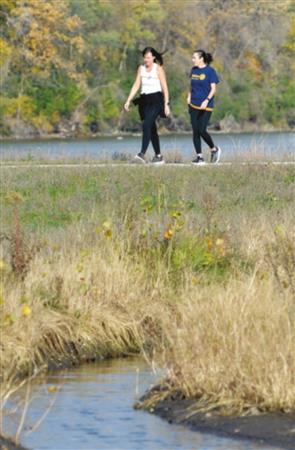
Monday's “Messenger” contained some very nice pictures of Rotarians and others participating in the World Day Walk for Polio on Saturday. Informal estimates are that 25 to 30 participated. The only club member mentioned in a caption was Mary Kay Daniel. This notation is quite appropriate as Mary Kay was our Rotarian Organizer of the event and deserves many kudos for doing so. Well cone World Rotarians.

Happy Dollars of Note:
Quite a lot is going on in the life of Jennifer Crimmins. She shared two happy dollars. One, she will be hosting hosting cross country runners for Team Time. Two, she has been promoted at UnityPoint Health, and will work in rural health. Congratulations, Jennifer!
Since its founding in 2004, Athletics for Education and Success (AFES) has worked to reach as many youth and families as possible, providing support wherever it is needed. Its programs include youth sports, after-school and summer programs, mentoring, housing assistance, food pantries, shoe giveaways and bedding programs. AFES has also stepped up for families in times of crisis, including helping a family who lost everything in a house fire.
Today, AFES serves 57 children through its programs, 67 through its summer program, and approximately 150 young people through its Jr. NBA basketball league. AFES isn't only for children from troubled homes--every young person can benefit from having a caring adult in their corner.
Destiny Clayton is helping carry that mission forward through her work with the AFES Mentor Program. The Mentoring Program's goal is simple: help young people move in the right direction and remind them that they matter. Mentors meet with students at least once a month, providing encouragement, guidance and, perhaps most importantly, letting kids know that someone cares about them. AFES' Mentor Program is licensed. The hope had been for the program to access grant funding as a licensed agency; sadly, federal funding for such programs was pulled this year. In spite of this, AFES is continuing the program. If you can help, whether financially or by becoming a mentor, please do!

November 2nd - Steve Hoesel
November 9th - Brennan Fehr
November 16th - John Garton
November 23rd - Mel Schroeder
November 30th - Teresa Naughton
December 7th - Joe Tofilon
December 14th - Casey Johnson
December 21st - Mary Kay Daniel
Decembber 28th - No Meeting (Christmas/New Years Break)